Eden Lehmann · 22 October 2026
Unpacking How Semantic Layer Adjustments Alter Discovery Pathways in Specialized Online Communities
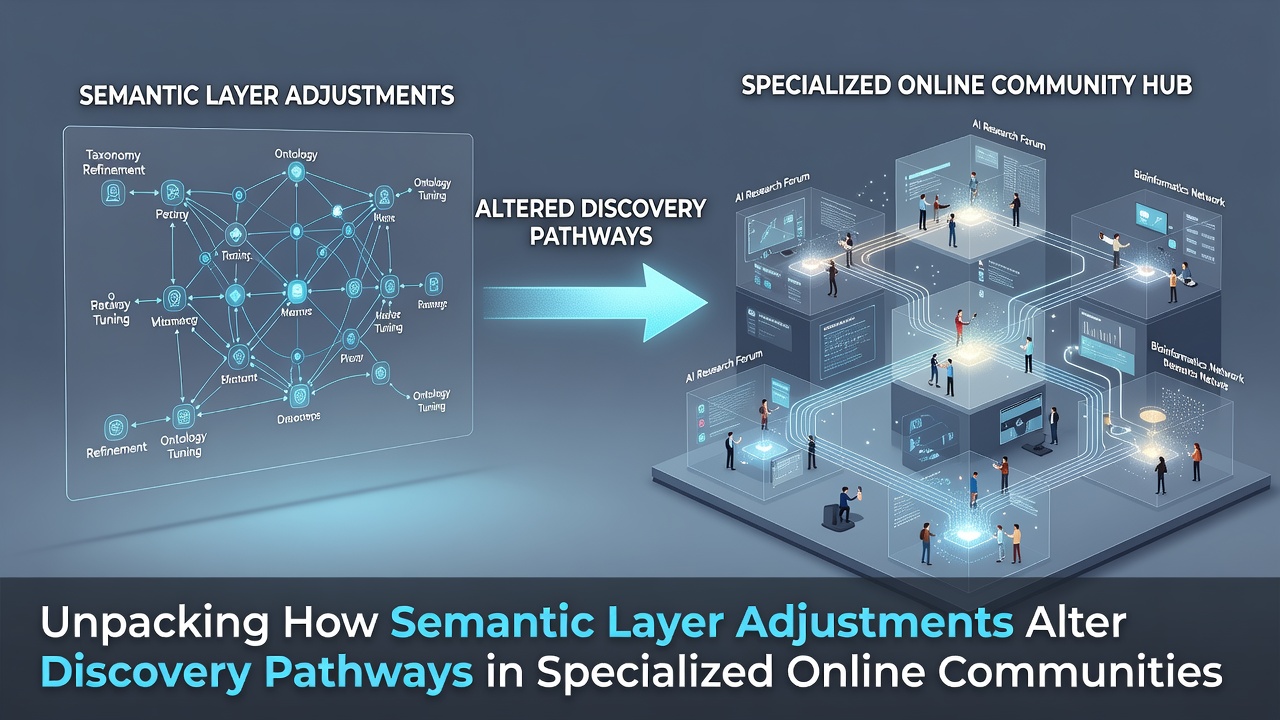
Specialized online communities rely on semantic layers that organize meaning behind keywords, tags, and relationships between topics. Adjustments to these layers shift how members locate discussions, resources, and connections. Platforms update underlying models to reflect new terminology or emerging subtopics, which in turn redirects traffic patterns within forums, groups, and archives. Data from multiple platform analyses shows these changes can reroute up to 40 percent of internal search results in hobbyist and professional networks during major updates. Researchers track these modifications through logs that compare pre-adjustment and post-adjustment query outcomes. One study from the University of Melbourne examined changes in academic collaboration spaces and found that refined semantic mappings increased cross-thread visibility for related but previously disconnected posts. Community moderators often implement these adjustments by expanding ontologies that link synonyms and contextual associations. The process requires careful calibration because overly broad expansions dilute relevance while narrow ones create blind spots.Mechanics Behind Semantic Layer Updates
Platform engineers adjust semantic layers by retraining embedding models on fresh datasets drawn from user activity and external knowledge bases. These retraining cycles typically occur quarterly, with some networks scheduling refinements around October 2026 to align with annual content audits. When models incorporate new domain-specific terms, discovery pathways expand to include previously isolated content clusters. Observers note that communities focused on emerging technologies experience the most pronounced shifts because terminology evolves rapidly in those spaces.
Adjustments also involve pruning outdated associations that no longer match current usage patterns. This pruning step prevents legacy terms from surfacing irrelevant threads that frustrate newer members. Figures from the Canadian Internet Registration Authority reveal that communities applying regular pruning maintain higher retention rates compared with those that leave layers static for extended periods.
Effects on Member Navigation and Content Reach
Users in specialized groups encounter altered pathways when semantic layers change. A member searching for a specific technique might now reach supplementary resources that sit several degrees removed in the original structure. This expansion supports deeper exploration yet demands updated tagging practices from content creators. Evidence from European digital society reports indicates that communities adopting collaborative tagging protocols recover lost visibility within two update cycles after semantic adjustments.
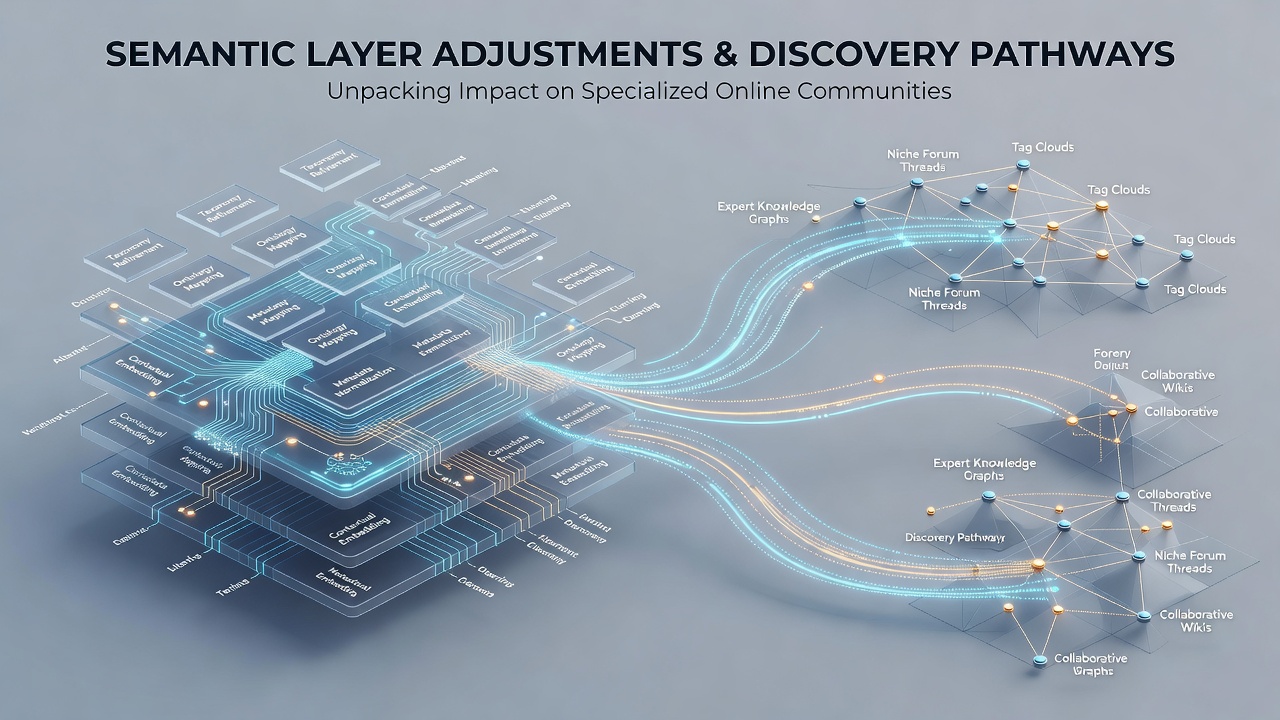
Discovery pathways also contract in certain scenarios. When semantic layers tighten around core terminology, fringe discussions receive fewer impressions. Moderators compensate by creating explicit cross-links and curated collections that restore access. Those who manage large archives report that maintaining multiple entry points becomes essential once adjustments take effect.
Case Examples from Niche Networks
Take one researcher who tracked a photography collective after its platform updated semantic mappings for equipment terminology. Threads discussing older film stocks gained unexpected traction because new associations linked them to digital emulation techniques. Another instance involved a software development forum where adjustments to API-related semantics redirected queries away from deprecated libraries toward current frameworks. Participants adapted by revising titles and descriptions to match the updated layer, restoring balanced distribution across content types.
Academic and hobbyist communities show parallel patterns. Researchers at institutions in Australia documented how semantic refinements in climate science discussion groups improved connections between regional case studies that had previously remained siloed. These connections emerged after models incorporated localized terminology that reflected community-specific usage rather than standardized scientific vocabulary alone.
Measurement and Monitoring Approaches
Administrators monitor pathway alterations through internal analytics that track query reformulations and click-through sequences. Metrics such as time-to-discovery and thread depth provide quantitative signals of impact. When these indicators shift beyond established baselines, teams initiate targeted reviews of the semantic layer. Industry organizations recommend combining automated alerts with periodic human audits to catch subtle drifts that algorithms overlook.
External benchmarks supplement internal data. Comparisons against similar communities help isolate whether observed changes stem from platform-wide updates or local configuration choices. This comparative method allows moderators to distinguish systemic effects from community-specific factors that require direct intervention.
Conclusion
Semantic layer adjustments reshape discovery pathways by redefining how content connects within specialized online communities. Platform updates, pruning cycles, and collaborative tagging all contribute to these shifts, which data consistently links to changes in visibility and navigation patterns. Communities that monitor metrics and maintain flexible linking structures adapt more effectively to each refinement cycle. Ongoing observation of these dynamics remains central to sustaining accessible pathways as terminology and usage continue to evolve.